
Description:
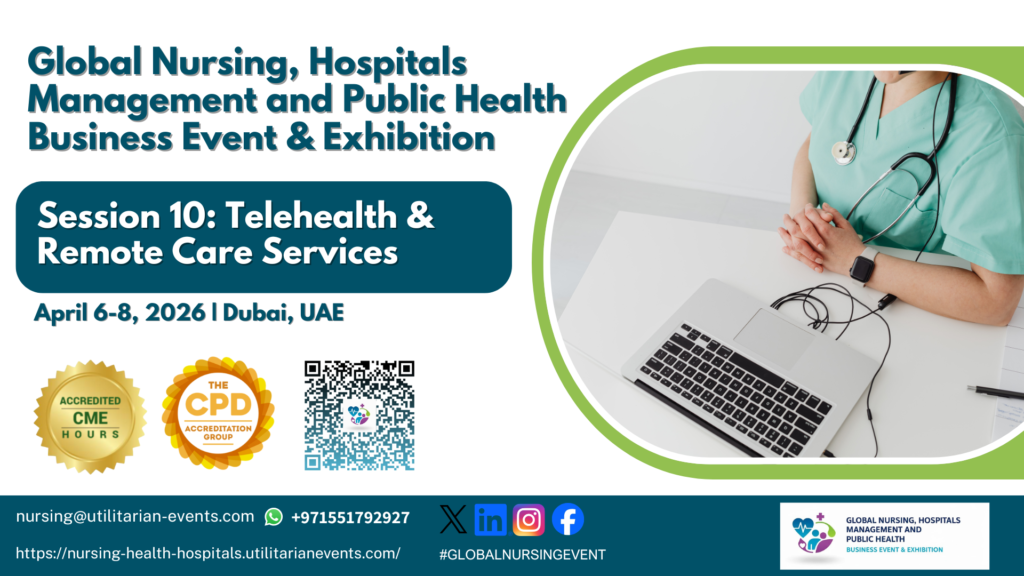
Telehealth & Remote Care Services is a modern approach to healthcare delivery that leverages digital technologies, telecommunications, and virtual platforms to provide medical care and consultation at a distance. It enables patients to access primary, specialty, and preventive care without the need for in-person visits, improving convenience, efficiency, and accessibility. Telehealth services include real-time video consultations, remote patient monitoring, mobile health applications, and secure communication channels for patient-provider interactions. By integrating these services with electronic health records and clinical workflows, telehealth enhances care continuity, supports chronic disease management, promotes early intervention, and empowers patients in self-care.
Upload here: https://nursing-health-hospitals.utilitarianevents.com/upload-presentation/
WhatsApp: https://wa.me/+971551792927
Email: nursing@utilitarian-events.com
Keynote Points:
Delivery of healthcare services through digital and virtual platforms for remote patient access
Enhances accessibility to medical care for rural, underserved, and mobility-limited populations
Supports real-time consultations, diagnosis, and follow-up care via video, phone, and messaging
Integration with electronic health records (EHRs) for seamless patient data management
Enables remote monitoring of chronic conditions through wearable devices and mobile apps
Facilitates early detection and intervention through continuous health tracking
Benefits:
Expands access to healthcare for patients in remote, rural, or underserved areas
Reduces travel time, costs, and logistical barriers for patients and providers
Enables timely consultations, diagnosis, and follow-up care, improving health outcomes
Supports continuous monitoring and management of chronic conditions
Enhances patient engagement, self-care, and adherence to treatment plans
Facilitates care delivery during emergencies, pandemics, or natural disasters