
Description:
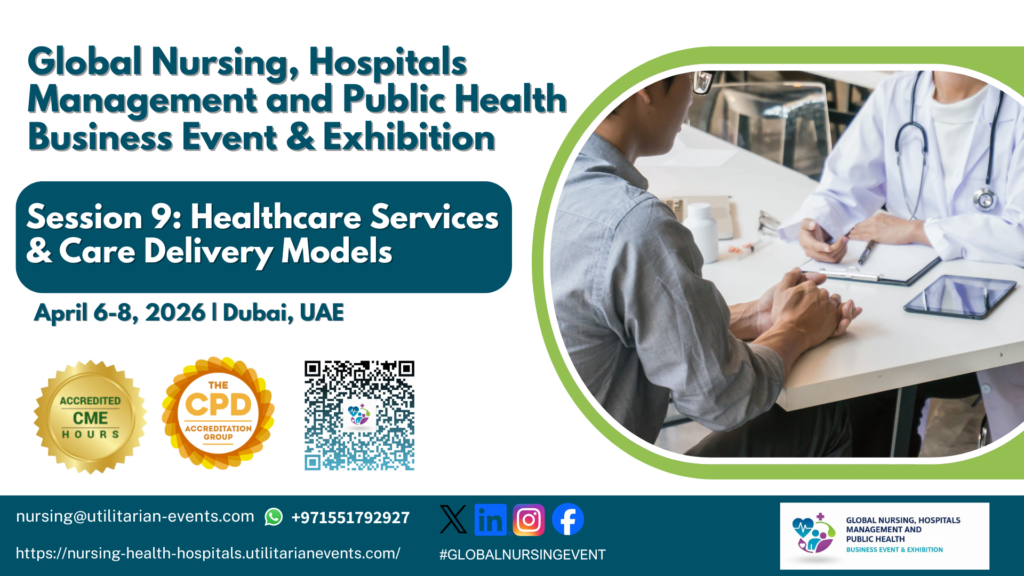
Healthcare Services & Care Delivery Models is a comprehensive field focused on the organization, management, and provision of healthcare to meet the needs of individuals and populations effectively. It examines how care is structured, coordinated, and delivered across various settings, including hospitals, clinics, community health centers, and home-based care. This field emphasizes patient-centered approaches, quality improvement, and efficient use of resources to ensure safe, timely, and equitable care. It also explores innovative care delivery models—such as integrated care, primary care networks, telehealth, and value-based care—that enhance accessibility, continuity, and outcomes.
Upload here: https://nursing-health-hospitals.utilitarianevents.com/upload-presentation/
WhatsApp: https://wa.me/+971551792927
Email: nursing@utilitarian-events.com
Keynote Points:
Design and organization of healthcare systems to provide efficient, patient-centered care
Implementation of integrated care models for seamless coordination across services and providers
Focus on value-based care to improve quality, outcomes, and cost-effectiveness
Adoption of primary, secondary, and tertiary care frameworks to meet diverse health needs
Use of telehealth and digital platforms to enhance accessibility and remote care delivery
Emphasis on preventive, chronic disease, and population health management
Benefits:
Ensures patient-centered care that meets the needs of diverse populations
Improves care coordination and continuity across different healthcare settings
Reduces healthcare costs through streamlined processes and resource optimization
Expands access to care, including preventive, primary, and specialty services
Supports early detection, management, and prevention of chronic and acute conditions
Encourages multidisciplinary collaboration for comprehensive patient care